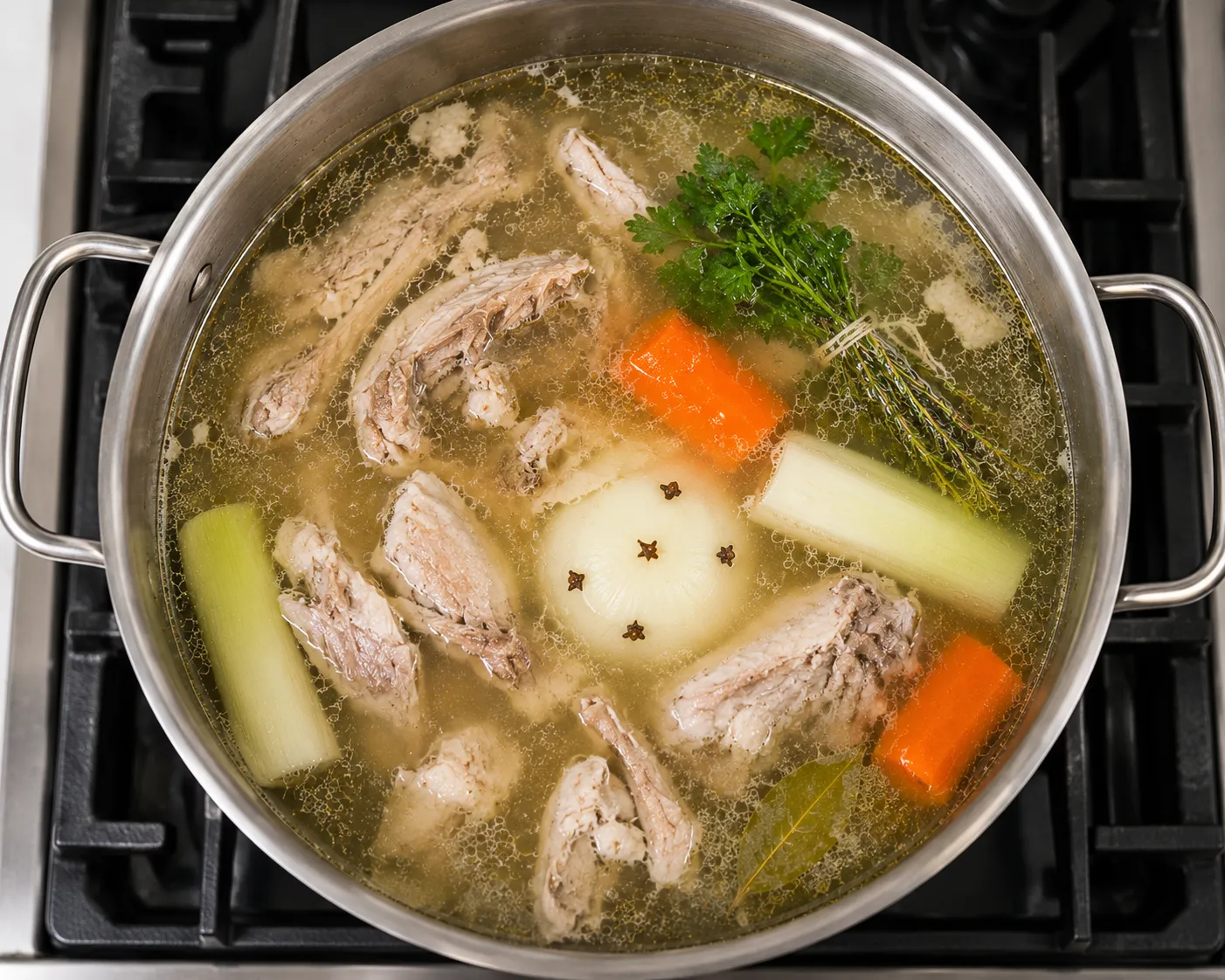
Category: Basics

  • Quick Pickled Red Onions with Warm Spices

    Quick Pickled Red Onions with Warm Spices

    Quick Pickled Red Onions with Warm Spices

    Casper @Applause for the ChefCasper @Applause for the Chef
    Quick pickled red onions use red onions, vinegar, sugar and whole spices for a sharp, bright condiment. The hot brine softens the onion, fixes the pink colour and gives enough sweetness to balance salads, tacos, sandwiches and grilled food.
    No ratings yet
    Servings
    Servings 1 jar

    Ingredients
     

    • 4 red onions thinly sliced
    • 250 ml water
    • 250 ml white vinegar
    • 2 tbsp caster sugar
    • 1 tsp mixed whole spices such as black peppercorns, allspice berries, cardamom or star anise

    Instructions

    • Peel the red onions and slice them very thinly, using a mandoline if available.
      4 red onions
    • Pack the sliced red onions into a clean glass jar, leaving a little space at the top.
    • Heat the water, white vinegar, caster sugar and whole spices in a small saucepan until boiling and the sugar has dissolved.
      250 ml water, 250 ml white vinegar, 2 tbsp caster sugar, 1 tsp mixed whole spices
    • Pour the hot brine over the onions, making sure they are covered. Seal the jar and leave to cool completely.
    • Use after about 1 hour for a quick pickle, or chill for a stronger flavour.

    Chef's notes

    • Store in the fridge once cool and use within 1 week.
    • White vinegar gives the brightest pink colour. Apple cider vinegar gives a softer, fruitier flavour.
    • For a milder onion flavour, rinse the sliced onions briefly under cold water before adding them to the jar.
    • Serve with tacos, burgers, salads, grilled meat, falafel, eggs or cheese sandwiches.
    • Use clean jars and utensils each time to keep the onions in good condition.
    Drink pairing
    Quick pickled red onions are sharp, sweet and lightly spiced, so the best drinks are crisp and fresh. Citrus, dry bubbles, light beer and bright white wines keep the vinegar balanced.

    Alcoholic

    • Dry Riesling or Grüner Veltliner for bright acidity and freshness
    • Mexican lager with lime for tacos, burgers and grilled food
    • Dry cider with crisp apple acidity for cheese boards and salads

    Non alcoholic

    • Sparkling water with lime and mint for a clean, sharp match
    • Unsweetened iced tea with lemon for a dry, refreshing pairing
    • Ginger cordial with soda water for gentle warmth against the vinegar
    Nutrition per serving
    Calories: 225kcal (11%) | Carbohydrates: 41g (14%) | Protein: 5g (10%) | Fat: 0.4g (1%) | Saturated Fat: 0.2g (1%) | Sodium: 35mg (2%) | Potassium: 648mg (19%) | Fiber: 7g (29%) | Sugar: 19g (21%) | Vitamin A: 9IU | Vitamin C: 33mg (40%) | Vitamin E: 0.1mg (1%) | Vitamin K: 2µg (2%) | Folate: 84µg (21%)
    Weekly inspiration

    Fresh recipes in your inbox

    Get seasonal recipes and smart kitchen basics from Applause for the Chef. No spam. Unsubscribe anytime.

  • Classic Greek Tzatziki with Cucumber & Dill

    Classic Greek Tzatziki with Cucumber & Dill

    Classic Greek Tzatziki with Cucumber & Dill

    Applause for the Chef Team
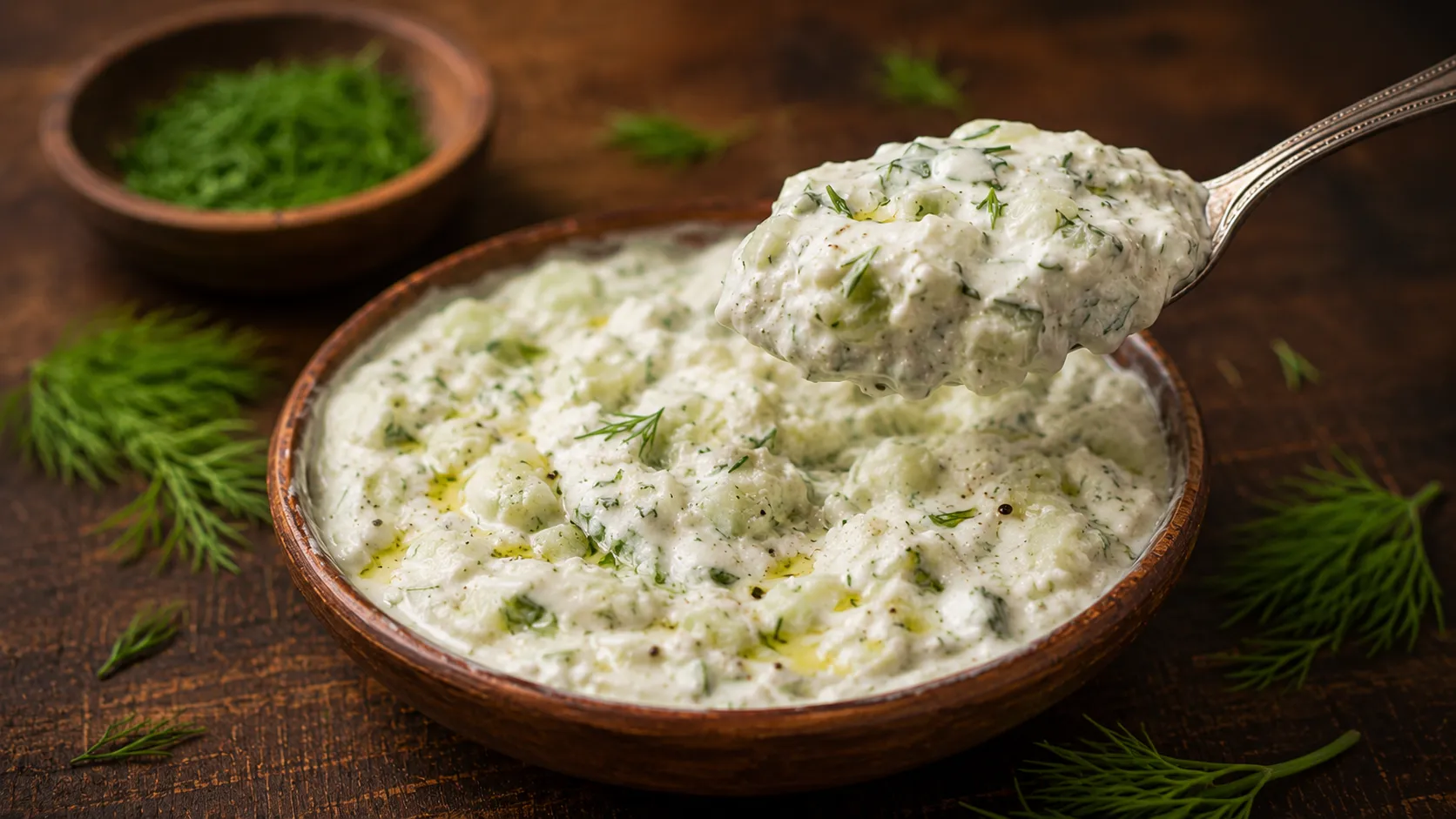
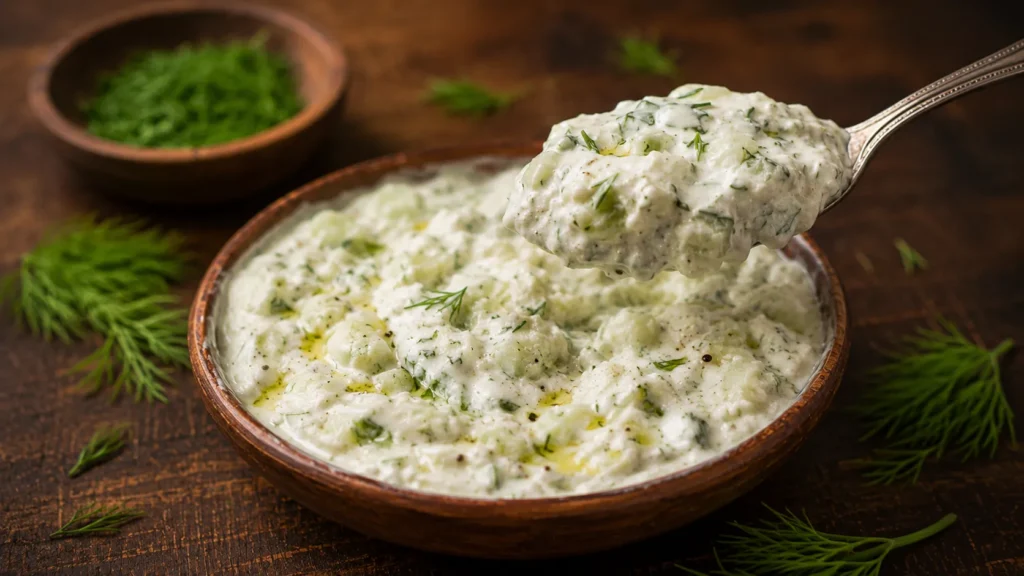
    Greek tzatziki is a cool yoghurt sauce with grated cucumber, garlic, white wine vinegar, olive oil and dill. Salting and squeezing the cucumber keeps the texture thick, fresh and spoonable.
    No ratings yet
    Servings
    Servings 4 servings

    Ingredients
     

    • 300 g strained Greek yoghurt
    • 1 cucumber
    • garlic clove finely grated
    • 3 tbsp white wine vinegar divided
    • ¼ bunch dill finely chopped, optional
    • 2 tbsp olive oil plus extra to serve if liked
    • 1 pinch salt plus extra for the cucumber
    • 1 pinch black pepper freshly ground

    Instructions

    • Peel the cucumber and grate it on the coarse side of a box grater. Toss with a pinch of salt and 1 tbsp of the white wine vinegar, then leave for 10 minutes.
      1 cucumber, 3 tbsp white wine vinegar, 1 pinch salt
    • Mix the Greek yoghurt, grated garlic, remaining white wine vinegar and olive oil in a bowl until smooth.
      300 g strained Greek yoghurt, 1/3 garlic clove, 3 tbsp white wine vinegar, 2 tbsp olive oil
    • Squeeze the cucumber firmly in a clean cloth or sieve to remove excess liquid. Discard the liquid.
    • Fold the drained cucumber into the yoghurt mixture with the dill. Season with salt and black pepper.
      1/4 bunch dill, 1 pinch black pepper, 1 pinch salt
    • Chill until needed, then stir before serving. Finish with a little extra olive oil if liked.

    Chef's notes

    • Squeeze the cucumber well, otherwise the tzatziki will loosen as it stands.
    • Use thick strained Greek yoghurt. Regular yoghurt should be drained first.
    • Dill is optional, but it gives a classic fresh finish. Mint can be used instead.
    • Keep covered in the fridge for up to 3 days.
    • Serve with pork gyros, grilled vegetables, warm pita or roast potatoes.
    Drink pairing
    Tzatziki suits clean, bright drinks that echo the cucumber, yoghurt, garlic and dill. Keep the pairing fresh rather than sweet.

    Alcoholic

    • Assyrtiko for sharp citrus freshness
    • Sauvignon Blanc with herbaceous notes
    • Crisp pilsner or Greek lager for a simple mezze pairing.

    Non alcoholic

    • Sparkling cucumber water with lemon
    • Chilled mint tea with a squeeze of lime
    • Kefir ayran with a small pinch of salt.
    Nutrition per serving
    Calories: 131kcal (7%) | Carbohydrates: 5g (2%) | Protein: 8g (16%) | Fat: 9g (14%) | Saturated Fat: 2g (13%) | Cholesterol: 4mg (1%) | Sodium: 43mg (2%) | Potassium: 108mg (3%) | Fiber: 1g (4%) | Sugar: 4g (4%) | Vitamin A: 102IU (2%) | Vitamin C: 3mg (4%) | Vitamin E: 1mg (7%) | Vitamin K: 10µg (10%) | Folate: 11µg (3%)

    Weekly inspiration

    Fresh recipes in your inbox

    Get seasonal recipes and smart kitchen basics from Applause for the Chef. No spam. Unsubscribe anytime.

  • Easy Greek Gyro Flatbreads for Soft Wraps

    Easy Greek Gyro Flatbreads for Soft Wraps

    Easy Greek Gyro Flatbreads for Soft Wraps

    Applause for the Chef Team
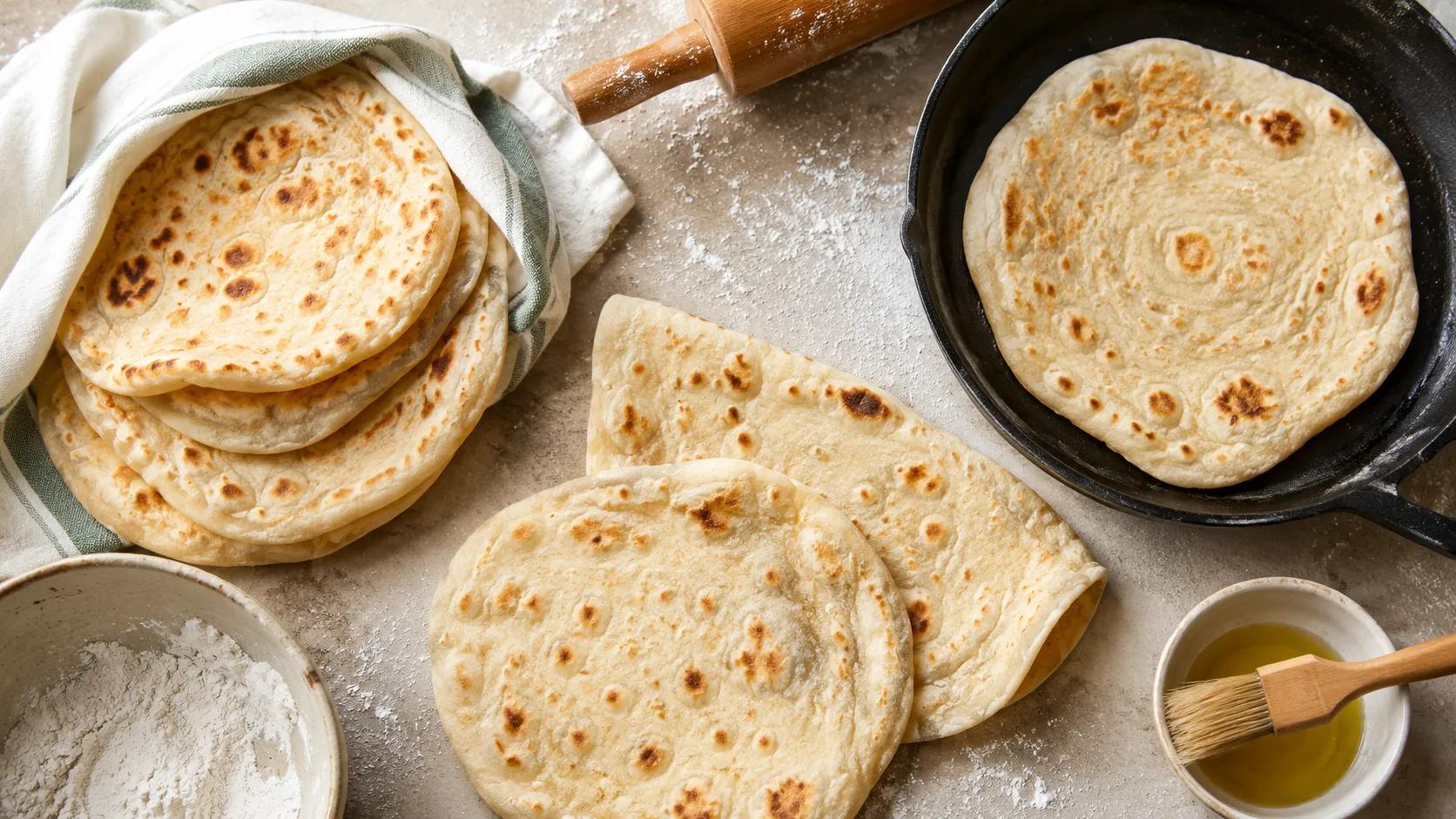
    Greek gyro flatbreads make soft, flexible wraps with flour, yeast, salt, sugar and warm water. A long rest gives the dough structure, while cooking in a hot dry pan keeps each bread pliable enough for gyros or mezze.
    No ratings yet
    Servings
    Servings 6 flatbreads

    Ingredients
     

    • 420 g plain flour plus extra for dusting
    • 2 tsp instant yeast
    • 1 ½ tsp fine salt
    • 1 ½ tsp caster sugar
    • 300 ml warm water
    • 1 tbsp olive oil for brushing the pan or bread

    Instructions

    • Whisk the flour and yeast together in a large bowl. Add the salt and sugar, then stir in the warm water until a rough dough forms.
      420 g plain flour, 2 tsp instant yeast, 1 1/2 tsp fine salt, 1 1/2 tsp caster sugar, 300 ml warm water
    • Turn the dough onto a lightly floured surface and knead for 5–6 minutes until smoother and elastic. Use only a little extra flour if the dough feels too sticky to handle.
    • Shape the dough into a ball, place it in a clean bowl and cover. Leave for about 2 hours, or until well risen and almost doubled.
    • Divide the dough into 6 equal pieces and roll each one into a ball. Roll each ball on a lightly floured surface into a thin round about 23 cm wide.
    • Heat a cast-iron pan or heavy skillet over medium heat. Cook one flatbread for 3–4 minutes on the first side until golden patches appear.
    • Turn the bread, brush or drizzle very lightly with olive oil and cook for 1 minute. Turn again and cook for a further 1–2 minutes, flipping once or twice, until cooked through and flexible.
      1 tbsp olive oil
    • Repeat with the remaining dough, stacking the cooked flatbreads in a clean cloth to keep them soft.

    Chef's notes

    • Store cooled flatbreads in an airtight bag for up to 4 days.
    • Freeze with baking paper between each bread for up to 3 months.
    • To reheat, warm briefly in a dry pan or wrap in foil and heat in a low oven.
    • The dough can be chilled after the first rise for up to 24 hours. Bring back to room temperature before rolling.
    • Replace up to 60 g of the plain flour with wholemeal flour for a slightly nuttier bread.
    Drink pairing
    These soft Greek gyro flatbreads work best with bright, refreshing drinks that suit warm bread, grilled fillings and yoghurt-based sauces without overwhelming them.

    Alcoholic

    Assyrtiko for crisp acidity with Greek fillings; dry Greek rosé for tomato, herbs and grilled meat; light pilsner or Greek lager for a clean, easy pairing.

    Non alcoholic

    Sparkling lemon water with mint; iced mountain tea with honey and lemon; cucumber and lime cooler with a little sea salt.
    Nutrition per serving
    Calories: 235kcal (12%) | Carbohydrates: 49g (16%) | Protein: 7g (14%) | Fat: 2g (3%) | Saturated Fat: 0.2g (1%) | Sodium: 585mg (25%) | Fiber: 2g (8%) | Sugar: 1.5g (2%)

    Weekly inspiration

    Fresh recipes in your inbox

    Get seasonal recipes and smart kitchen basics from Applause for the Chef. No spam. Unsubscribe anytime.

  • Classic Mirepoix for Stocks, Soups & Sauces

    Classic Mirepoix for Stocks, Soups & Sauces

    Classic Mirepoix for Stocks, Soups & Sauces

    Applause for the Chef TeamApplause for the Chef Team
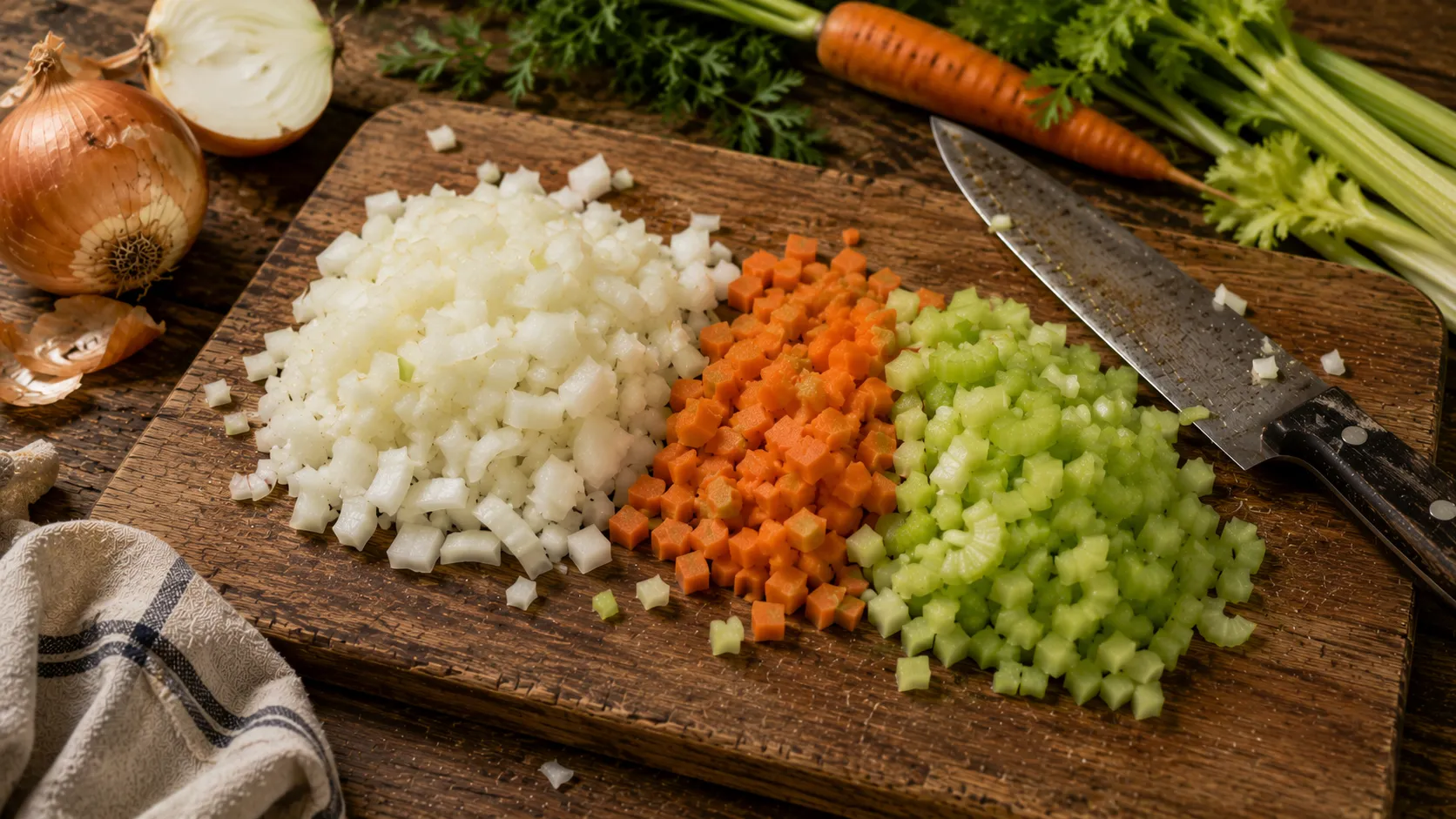
    Classic mirepoix is a simple aromatic base of onion, carrot and celery cut to an even size. The 2:1:1 balance gives stocks, soups, sauces and braises a clean savoury foundation without dominating the final dish.
    No ratings yet
    Servings
    Servings 1 batch

    Ingredients
     

    • 400 g onions
    • 200 g carrots
    • 200 g celery sticks

    Instructions

    • Trim and peel the onions, carrots and celery where needed.
      400 g onions, 200 g carrots, 200 g celery sticks
    • Cut the vegetables into even pieces according to the cooking time of the dish. Use small dice for quick sauces and larger chunks for stocks or long braises.
      400 g onions, 200 g carrots, 200 g celery sticks
    • Use the mirepoix raw in stocks, or sweat it gently in a little fat before adding liquid for soups, sauces and braises.
      400 g onions, 200 g carrots, 200 g celery sticks
    • Cook until softened but not browned for a light base, or allow light colour only when the final dish needs deeper flavour.
      400 g onions, 200 g carrots, 200 g celery sticks

    Chef's notes

    • The classic ratio is 2 parts onion to 1 part carrot and 1 part celery by weight.
    • Cut size matters. Small dice cooks quickly, while larger pieces suit stocks and long simmered dishes.
    • Prepare ahead and refrigerate in an airtight container for up to 2 days.
    • Freeze raw chopped mirepoix for cooked dishes, but not for preparations where crisp texture matters.
    • For a paler stock or sauce, reduce the carrot slightly and avoid browning the vegetables.
    Drink pairing
    Mirepoix is a preparation base rather than a finished dish, so pair drinks with the soup, sauce, stock or braise it supports.

    Alcoholic

    • Dry white wine for light soups
    • Pinot Noir for braises
    • Dry cider for rustic stews

    Non alcoholic

    • Sparkling water with lemon
    • Unsweetened iced tea
    • Light vegetable broth
    Nutrition per serving
    Calories: 280kcal (14%) | Carbohydrates: 63g (21%) | Protein: 7g (14%) | Fat: 2g (3%) | Saturated Fat: 0g | Sodium: 210mg (9%) | Fiber: 16g (67%) | Sugar: 30g (33%)

    Weekly inspiration

    Fresh recipes in your inbox

    Get seasonal recipes and smart kitchen basics from Applause for the Chef. No spam. Unsubscribe anytime.

  • Game Glace Escoffier Style (Glace de Gibier)

    Game Glace Escoffier Style (Glace de Gibier)

    Game Glace Escoffier style (Glace de Gibier)

    Applause for the Chef TeamApplause for the Chef Team
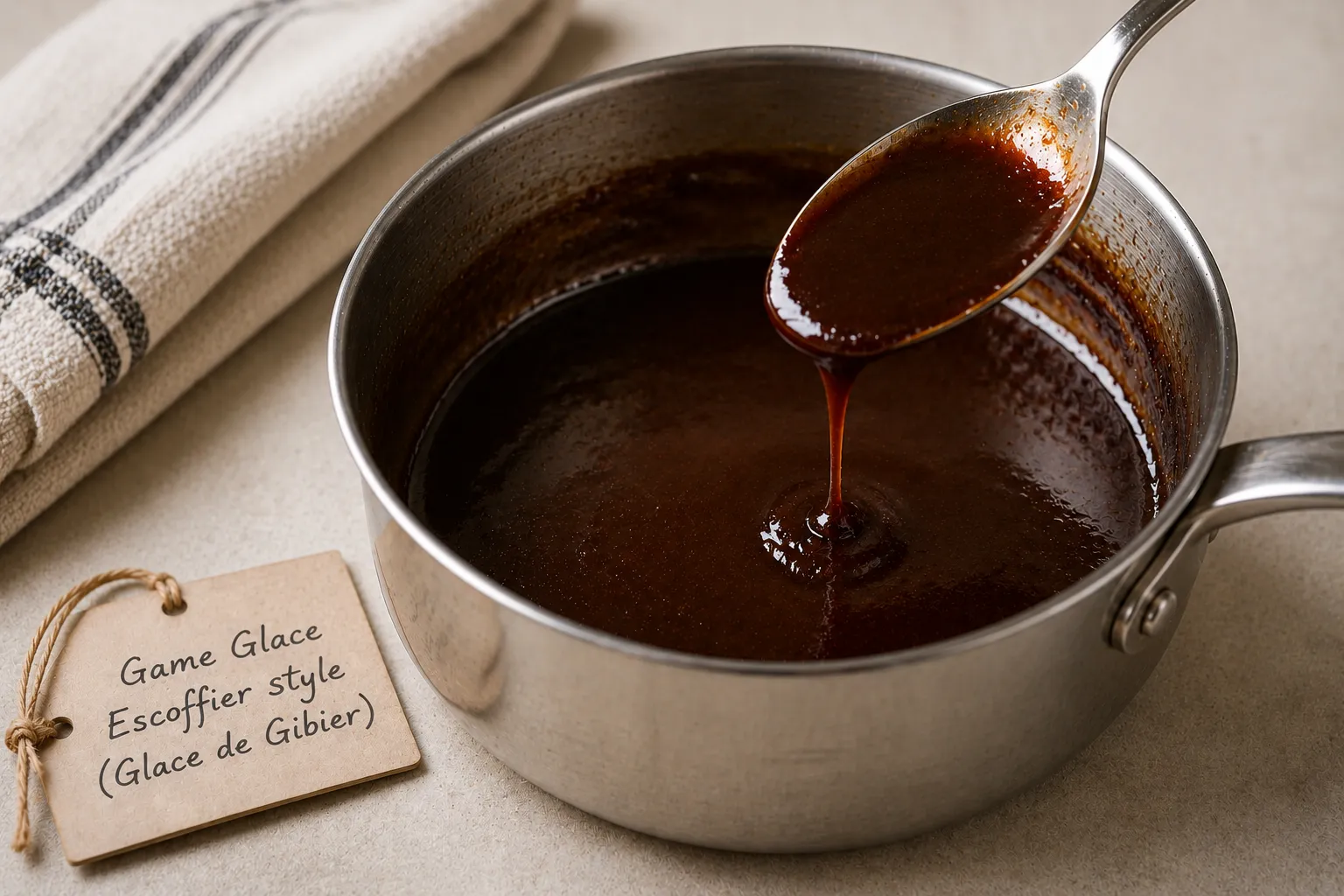
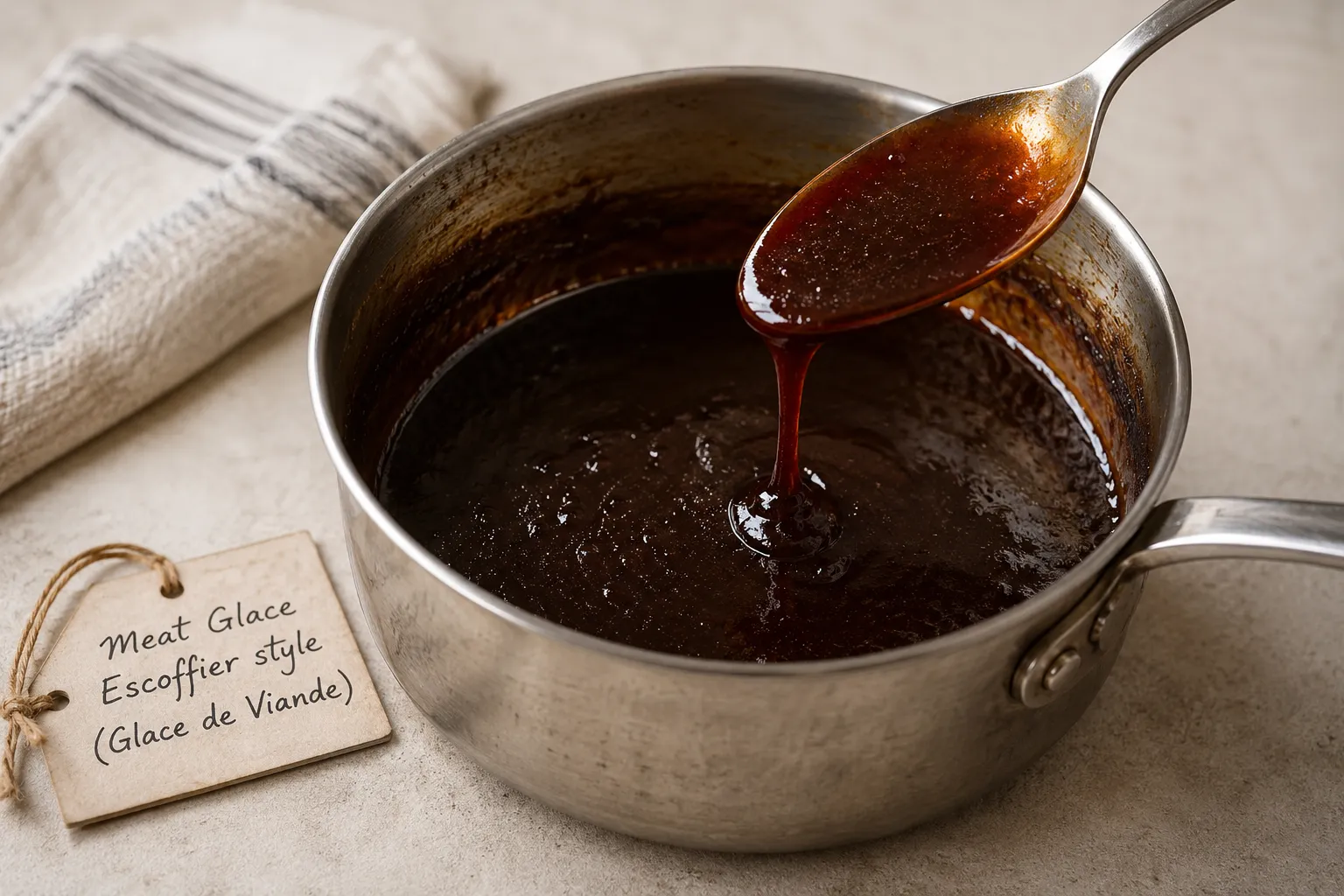
    This home-cook version has been scaled from professional kitchen quantities to practical enthusiast quantities. Game glace is a concentrated reduction of game stock. It gives sauces for venison, hare, rabbit and game birds a deeper flavour and a polished finish.
    No ratings yet
    Servings
    Servings 500 ml

    Ingredients
     

    • 0.5 l game stock or stock from a specific game animal

    Instructions

    • Reduce the game stock gently in a wide pan.
      0.5 l game stock
    • Strain as it concentrates and transfer to smaller pans.
    • Continue until the glace is glossy and coats the spoon.

    Chef's notes

    • Use a game stock that matches the final dish when possible.
    • Reduce slowly to avoid harshness.
    • Juniper-heavy stocks become stronger as they reduce, so use restraint.
    • Store in small portions.
    • Add near the end of sauce making.
    Nutrition per serving

    Weekly inspiration

    Fresh recipes in your inbox

    Get seasonal recipes and smart kitchen basics from Applause for the Chef. No spam. Unsubscribe anytime.

  • Poultry Glace  Escoffier style (Glace de Volaille)

    Poultry Glace  Escoffier style (Glace de Volaille)

    Poultry Glace (Escoffier style Glace de Volaille)

    Applause for the Chef TeamApplause for the Chef Team
    This home-cook version has been scaled from professional kitchen quantities to practical enthusiast quantities. Poultry glace is made by reducing poultry stock until concentrated and glossy. It is used in small quantities to strengthen chicken sauces, poultry jus and finished dishes.
    No ratings yet
    Servings
    Servings 500 ml

    Ingredients
     

    Instructions

    • Reduce the poultry stock in the same manner as meat glace.
      0.5 l poultry stock
    • Strain into smaller pans as it concentrates.
    • Skim and reduce gently until glossy and lightly coating.

    Chef's notes

    • Use clear poultry stock for the cleanest flavour.
    • Reduce slowly and skim as needed.
    • Lower the heat once the liquid becomes syrupy.
    • Freeze in small portions for sauce work.
    • Use sparingly because the flavour is concentrated.
    Nutrition per serving

    Weekly inspiration

    Fresh recipes in your inbox

    Get seasonal recipes and smart kitchen basics from Applause for the Chef. No spam. Unsubscribe anytime.

  • Fish Glace Escoffier style (Glace de Poisson)

    Fish Glace Escoffier style (Glace de Poisson)

    Fish Glace Escoffier style (Glace de Poisson)

    Applause for the Chef TeamApplause for the Chef Team
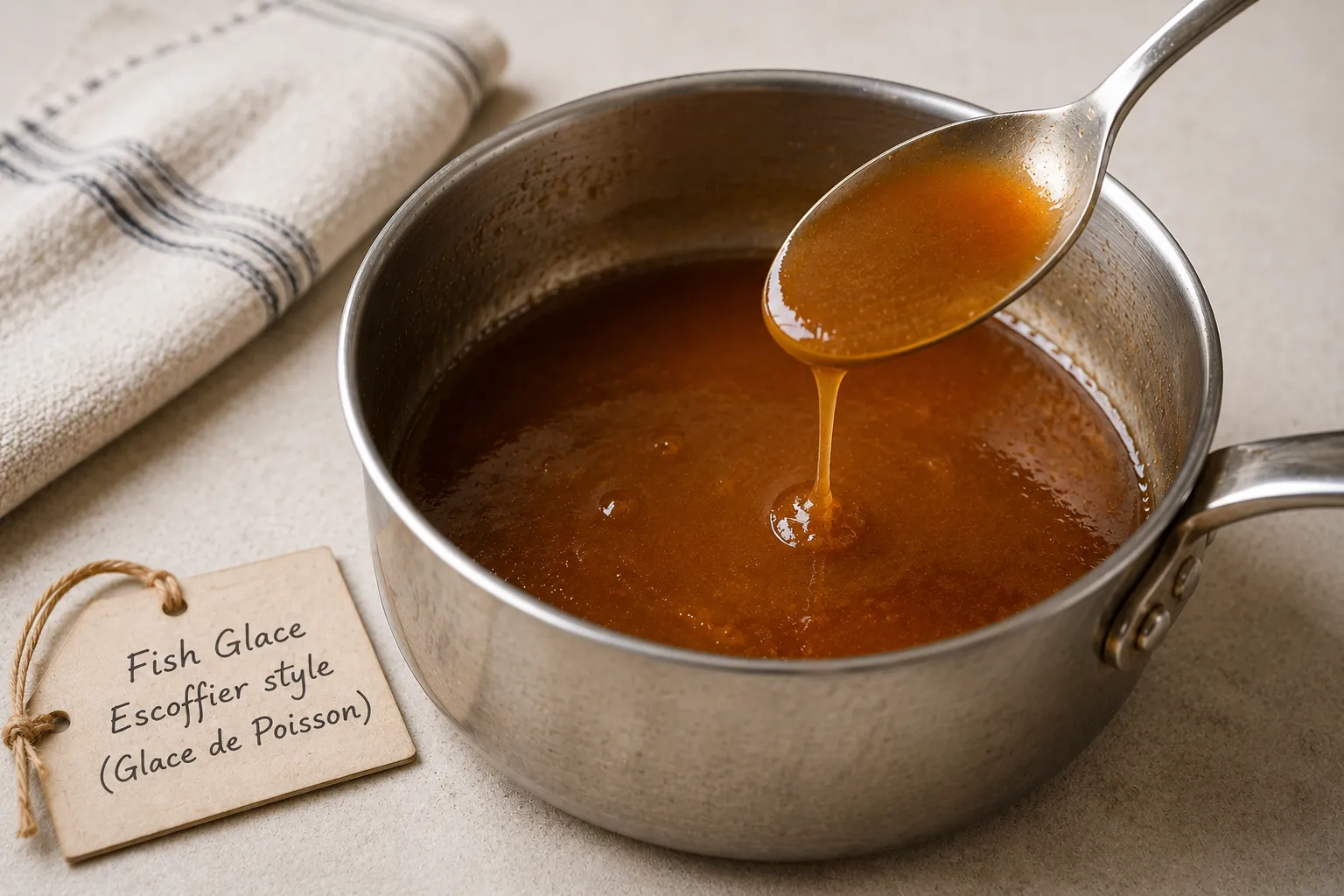
    This home-cook version has been scaled from professional kitchen quantities to practical enthusiast quantities. Fish glace is a concentrated fish stock reduction used less often than meat or poultry glace, but useful for strengthening fish sauces. It is best made from the same fish used in the dish.
    No ratings yet
    Servings
    Servings 500 ml

    Ingredients
     

    Instructions

    • Reduce the fish stock gently after it has been used for poaching or prepared as a fumet.
      0.5 l fish stock or fish fumet
    • Strain during reduction and continue until concentrated.
    • Use the fish glace to reinforce sauces served with the same fish.

    Chef's notes

    • Fish glace is more delicate than meat glace and should not be over-reduced.
    • Use very fresh fish stock only.
    • Best added to sauces for the same fish used to make the stock.
    • Avoid oily fish for this preparation.
    • Use immediately or freeze in small portions.
    Nutrition per serving

    Weekly inspiration

    Fresh recipes in your inbox

    Get seasonal recipes and smart kitchen basics from Applause for the Chef. No spam. Unsubscribe anytime.

  • Demi-Glace Sauce Escoffier style (Sauce Demi-Glace)

    Demi-Glace Sauce Escoffier style (Sauce Demi-Glace)

    Demi-Glace Sauce Escoffier style (Sauce Demi-Glace)

    Applause for the Chef TeamApplause for the Chef Team
    This home-cook version has been scaled from professional kitchen quantities to practical enthusiast quantities. Demi-glace is a refined reduction of espagnole sauce, finished with stock or glace for body and shine. It is a concentrated classic sauce base used in small quantities to enrich meat sauces.
    No ratings yet
    Servings
    Servings 500 ml

    Ingredients
     

    Instructions

    • Reduce the espagnole sauce gently until concentrated and polished in flavour.
      0.5 l espagnole sauce
    • Add brown stock or meat glace as needed to adjust body and gloss.
      0.1 l brown stock or meat glace
    • Strain carefully and continue reducing until the sauce coats the back of a spoon.
    • If using wine, add it off the heat at the end so its aroma remains fresh.
      25 ml Madeira, port, marsala or other finishing wine

    Chef's notes

    • Use fully cooked espagnole as the starting point.
    • Reduce gently to avoid scorching.
    • Add finishing wine at the end rather than cooking away its aroma.
    • The finished sauce should be glossy and lightly coating, not paste-like.
    • Chill in small containers for easy use.
    Nutrition per serving

    Weekly inspiration

    Fresh recipes in your inbox

    Get seasonal recipes and smart kitchen basics from Applause for the Chef. No spam. Unsubscribe anytime.

  • Blond Roux Escoffier style (Roux Blond)

    Blond Roux Escoffier style (Roux Blond)

    Blond Roux Escoffier style (Roux Blond)

    Applause for the Chef TeamApplause for the Chef Team
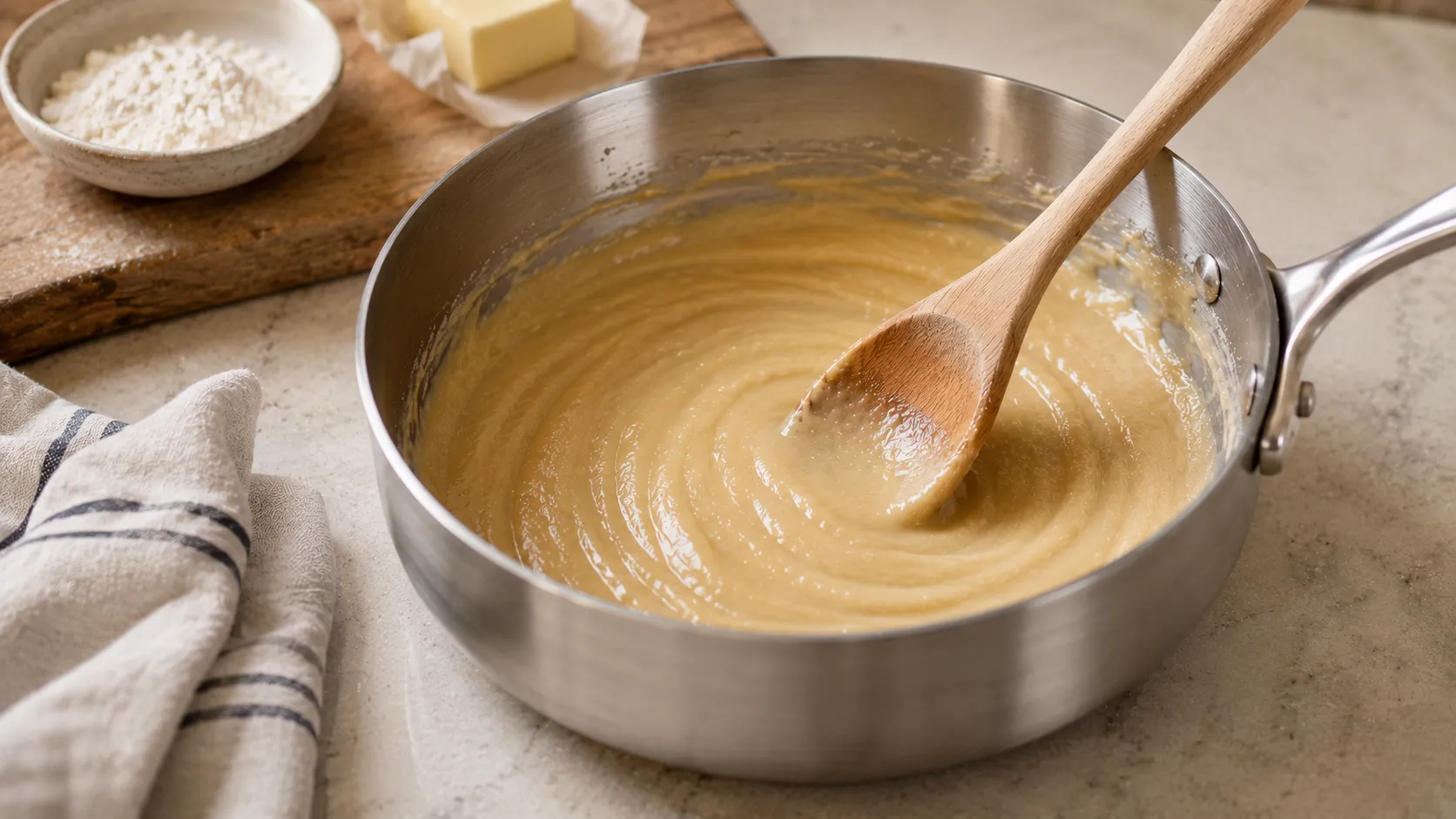
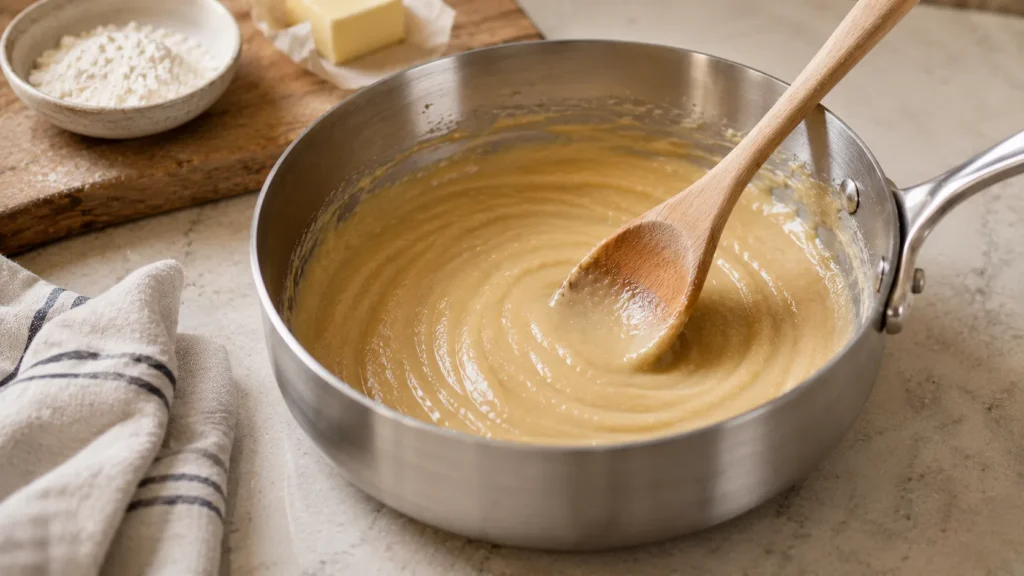
    This home-cook version has been scaled from professional kitchen quantities to practical enthusiast quantities. Blond roux is cooked just long enough to lose the raw flour taste and develop a pale golden colour. It is useful for sauces that need a mild toasted note without the depth of brown roux.
    No ratings yet
    Servings
    Servings 250 g

    Ingredients
     

    • 125 g butter
    • 150 g sifted plain flour

    Instructions

    • Melt the butter gently in a heavy pan.
      125 g butter
    • Add the sifted flour and stir until smooth.
      150 g sifted plain flour
    • Cook slowly until the roux takes on a pale blond colour.
    • Remove from the heat and use immediately or cool for later use.

    Chef's notes

    • Cook over gentle heat to avoid browning too quickly.
    • The colour should be light blond, not brown.
    • Use for velouté-style sauces and lighter savoury preparations.
    • Stir constantly to prevent lumps.
    • Cool before storing if not using at once.
    Nutrition per serving

    Weekly inspiration

    Fresh recipes in your inbox

    Get seasonal recipes and smart kitchen basics from Applause for the Chef. No spam. Unsubscribe anytime.

  • White Roux Escoffier style (Roux Blanc)

    White Roux Escoffier style (Roux Blanc)

    White Roux Escoffier style (Roux Blanc)

    Applause for the Chef TeamApplause for the Chef Team
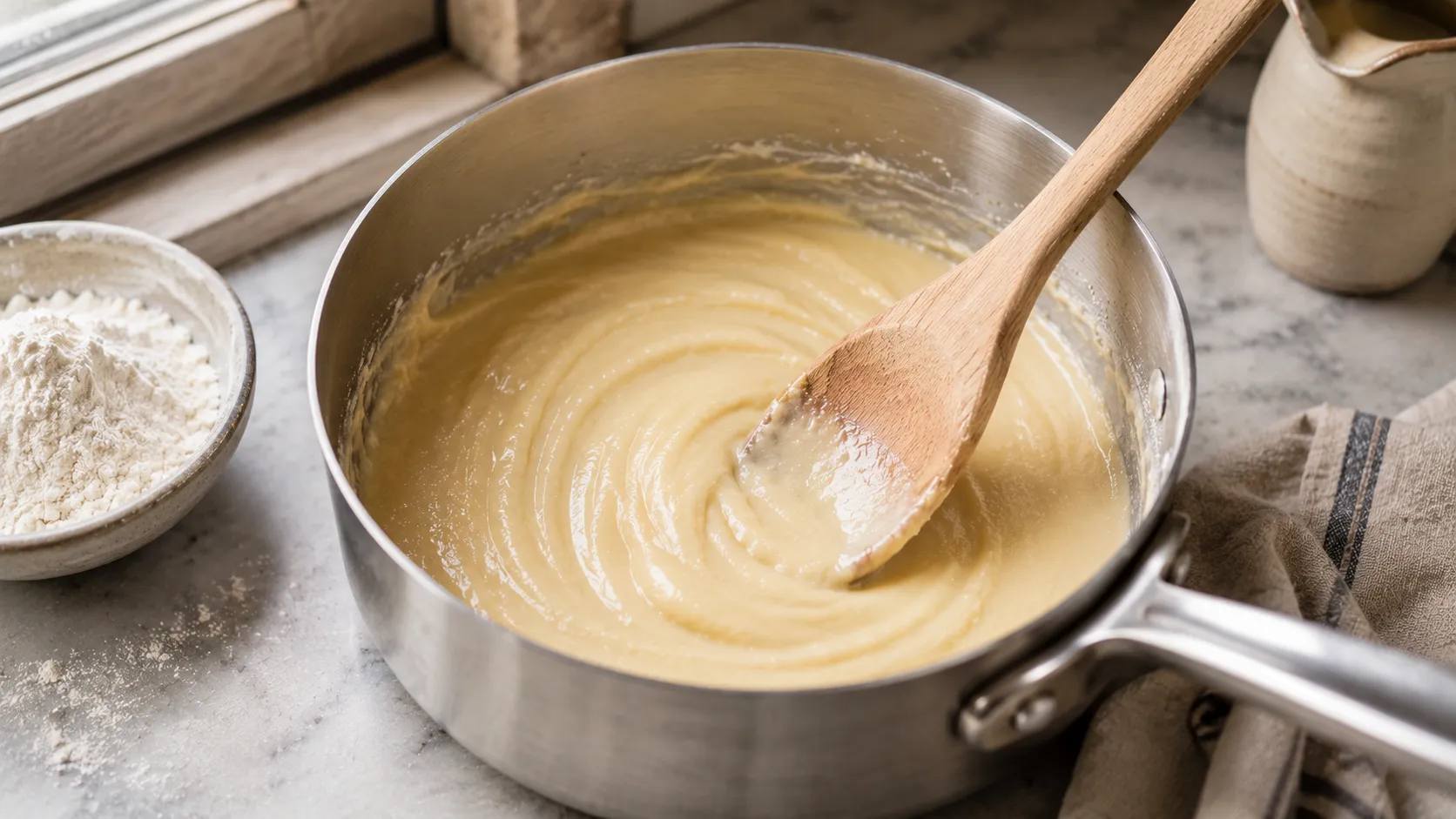
    This home-cook version has been scaled from professional kitchen quantities to practical enthusiast quantities. White roux is the quickest and palest roux, cooked only until the raw flour taste disappears. It is used for white sauces where colour must remain light and the flavour neutral.
    No ratings yet
    Servings
    Servings 250 g

    Ingredients
     

    • 125 g butter
    • 150 g sifted plain flour

    Instructions

    • Melt the butter gently without letting it colour.
      125 g butter
    • Add the sifted flour and stir until the mixture is smooth.
      150 g sifted plain flour
    • Cook for a few minutes only, just long enough for the raw flour flavour to disappear.
    • Use immediately for white sauces or cool and store.

    Chef's notes

    • Do not allow the butter or flour to colour.
    • White roux has stronger thickening power than darker roux.
    • Use for béchamel, white velouté and cream sauces.
    • Stir continuously while cooking.
    • Cool before storing if made ahead.
    Nutrition per serving

    Weekly inspiration

    Fresh recipes in your inbox

    Get seasonal recipes and smart kitchen basics from Applause for the Chef. No spam. Unsubscribe anytime.