
Pantry Basic
Flour
A clear guide to choosing and using flour for baking, thickening, doughs, batters and sauces.
Use for
Baking, bread, pastry, pancakes, sauces, thickening
What it is
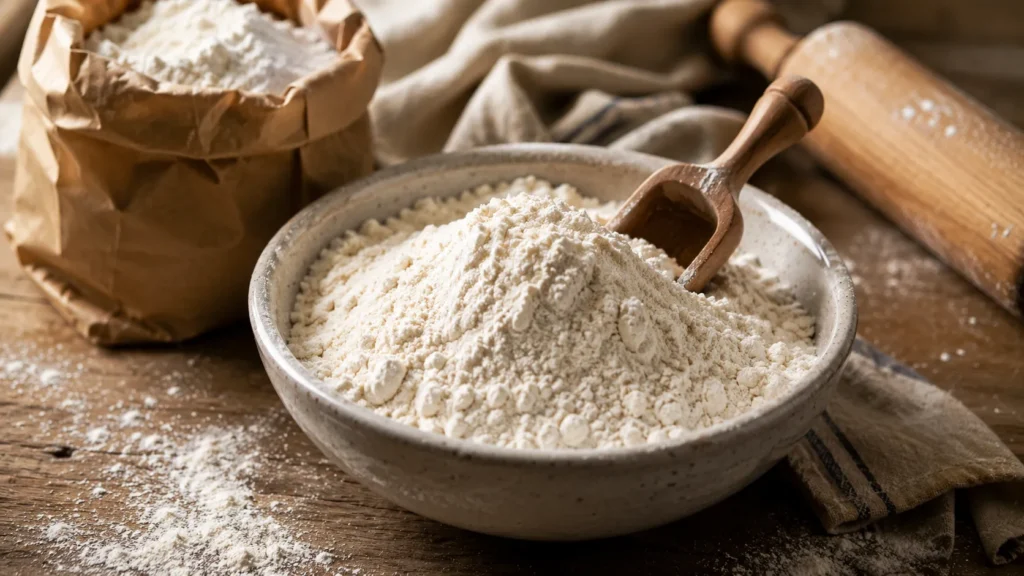
Flour is finely milled grain, most often wheat, used to build structure, thicken liquids and create doughs and batters. In everyday cooking, it appears in cakes, bread, pastry, pancakes, roux, sauces and coatings for meat or fish.
Different flours contain different levels of protein. Higher-protein flour makes stronger gluten, which is useful for bread and pizza. Lower-protein flour gives softer cakes and tender pastry.
How to choose
Keep plain flour as your everyday all-rounder. It works for sauces, pancakes, cakes, biscuits, pastry and light coatings. Add strong white bread flour if you bake bread or pizza. Self-raising flour is convenient for quick cakes and scones, but it is less flexible because the raising agent is already mixed in.
- Plain flour: sauces, pancakes, pastry, biscuits and general baking.
- Strong bread flour: bread, pizza dough and chewy rolls.
- Self-raising flour: quick cakes, sponge cakes and scones.
- Wholemeal flour: nuttier flavour and more fibre, often best mixed with white flour for lighter texture.
How to store
Store flour in an airtight container in a cool, dry cupboard. This protects it from moisture, insects and kitchen smells. Wholemeal flour contains more natural oils and can go rancid sooner than white flour.
If flour smells musty, bitter, stale or oily, replace it. For long storage, especially in warm kitchens, flour can be kept in the freezer in a sealed bag or box.
How to use
Use flour to make doughs and batters, to thicken sauces and soups, to dust surfaces when rolling pastry, and to coat food before frying. For sauces, cook flour with butter or oil first to remove the raw taste and help prevent lumps.
- Use equal weights of flour and butter for a classic roux.
- Sift flour for very light cakes or when it has lumps.
- Do not overmix cake batters once flour is added, or the texture can become tough.
- Let pancake and crêpe batters rest so the flour hydrates properly.
Substitutions
Cornflour can replace flour for thickening some sauces, but it gives a glossier, lighter texture and should be mixed with cold liquid before adding to hot liquid. Gluten-free flour blends can replace wheat flour in some cakes and sauces, but bread and pastry may need specific recipes.
Ground almonds, oats or breadcrumbs can sometimes replace flour as coatings, but they will change texture and flavour.

Share your experience